Archive Astronomy
15.1.2014 von Guido
· Category: Astronomy, Planets

Can you pick up Jupiter’s moons with an old digital bridge camera? It turns out you can: this is a 100% crop of an 8 megapixel image from my Canon Powershot S5 at 12x zoom – while the camera is not able pick up details from Jupiter’s cloud bands, all four galilean moons are distinctly visible here. It’s by no means a pretty shot, but it’s still amazing that it’s possible at all – this is another planet in our solar system with its moons! This was photographed on January 12th at about 19:00 CET.
5.12.2013 von Guido
· Category: Astronomy, Skywatching
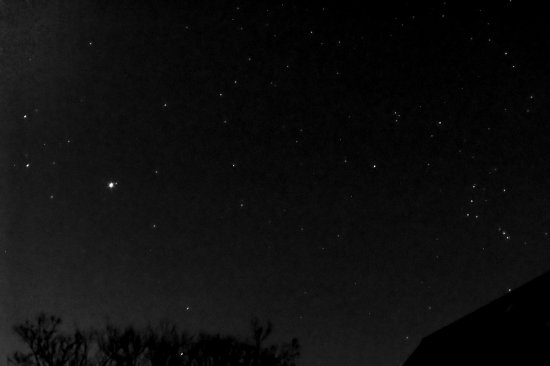
I suspect it’s more a case of “between the storms” since there seems to be more bad weather on the way, but this is what transpired after the thunderstorm only a short time ago: a starry night. There might be a little more stars than usual in here, because I was not able to tell some of the dead pixels apart from the real thing – but I think I got most of them out. It’s a 15-second exposure, so everything slightly elongated should be a star, or a planet in case of Jupiter on the left (which looked magnificent through the telescope)!
3.12.2013 von Guido
· Category: Astronomy, Blog, Moon, Trees
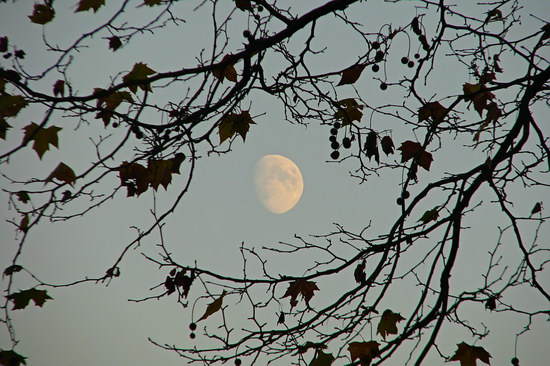
From mid-November, the Moon with some strange stuff orbiting around it :-). This is actually a composite from two images because I was not able to get the moon and the tree branches together in focus, but basically it’s just a kind of focus stacking so it doesn’t really count as “photoshopping”.
10.11.2013 von Guido
· Category: Astronomy, Moon
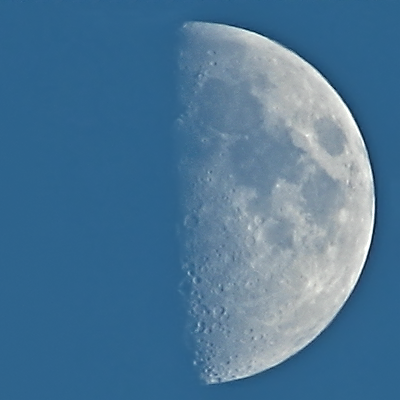
I just realized that I had not posted any Moon photos since August, so here’s today’s late afternoon Moon!
11.9.2013 von Guido
· Category: Astronomy, Blog
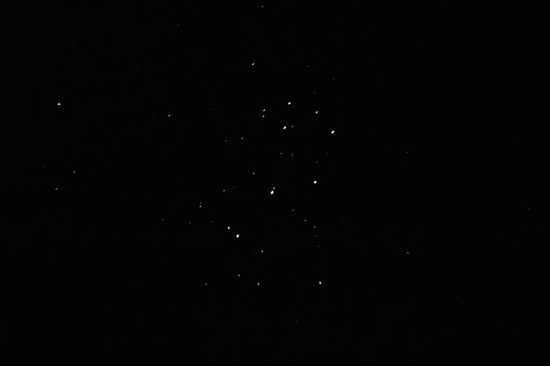
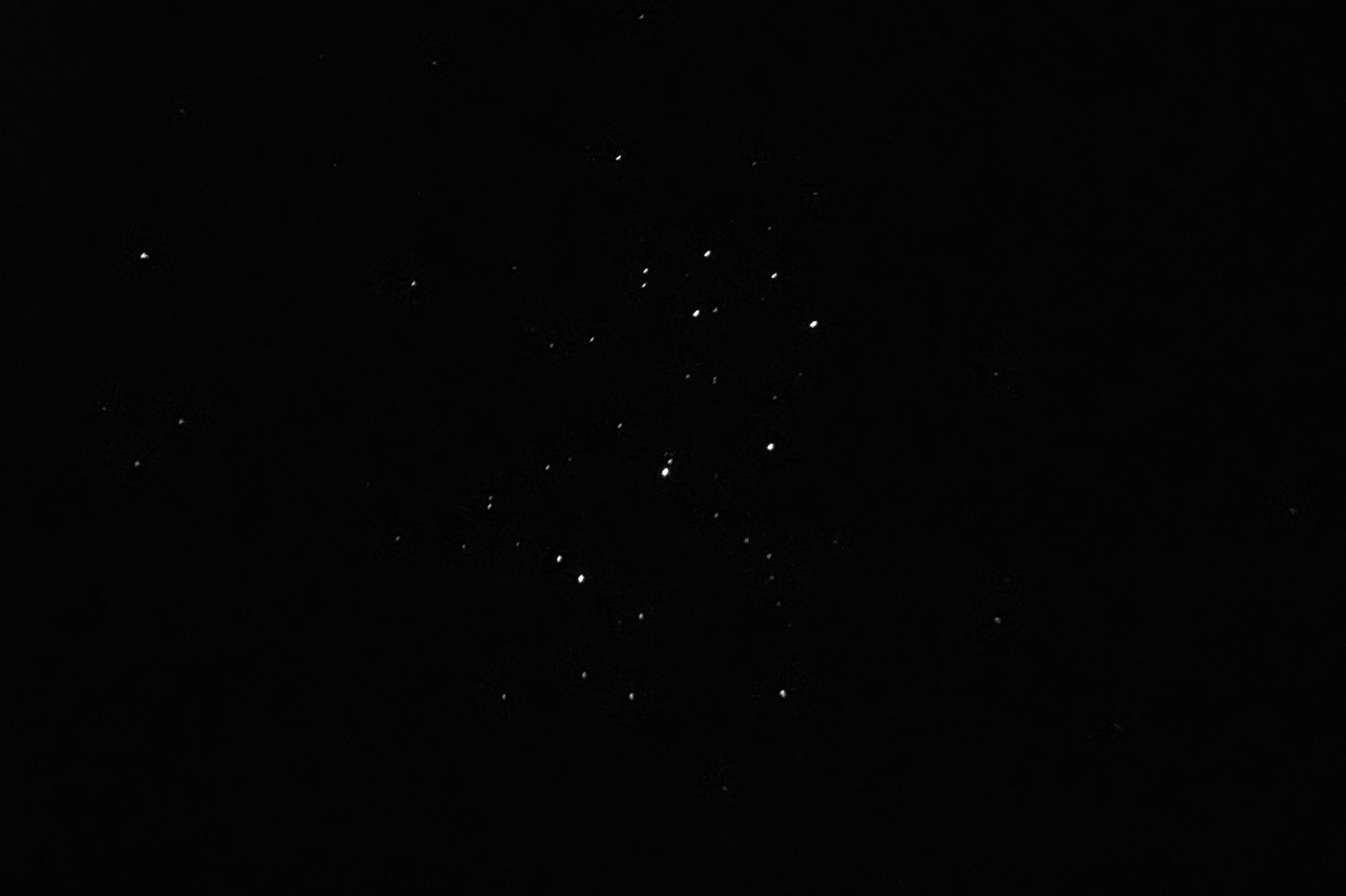
Trying to somehow catch the Pleiades with my S5 – slightly trailing, but well recognizable. The biggest surprise is that the light sensitivity of the camera is so good that they show up on the live viewscreen, making finding the star cluster very easy. Postprocessing involved lots of noise-filtering, though.
7.9.2013 von Guido
· Category: Astronomy, ISS & Co
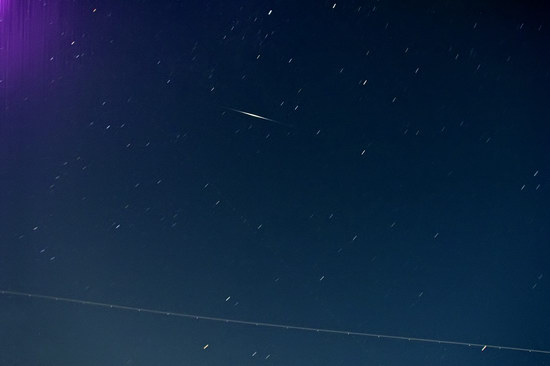
My first, and hopefully not last, capture of an Iridium satellite flare. These get insanely bright and when you know how to spot them, they’re really easy to see. This was taken on the evening of September 5th looking directly eastwards at about 21:30. I had to take a 128-second exposure because I wasn’t sure if my watch was correct, so there are also some nice startrails and two planes included in addition to some sensor glow on the top left. Not bad for a camera only built for a maximum exposure time of 15 seconds!
22.8.2013 von Guido
· Category: Astronomy, Blog, Moon
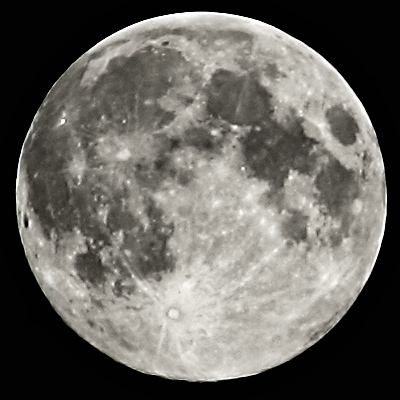
Another Moon shot, this time from the 20th – it’s supposed to be a “Blue Moon”,
but I didn’t notice any of that. Except, that for some reason, I didn’t get a very clear image!
21.8.2013 von Guido
· Category: Astronomy, Blog, Moon
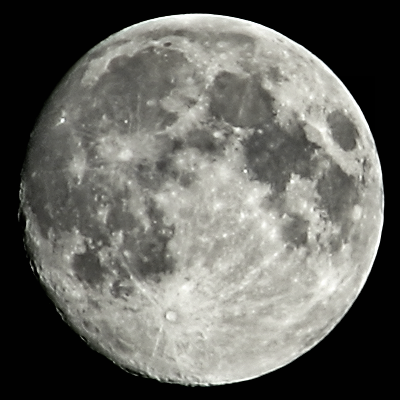
The Moon from August 19th – as usual, original size, all my camera can capture.
19.8.2013 von Guido
· Category: Astronomy, Blog, ISS & Co
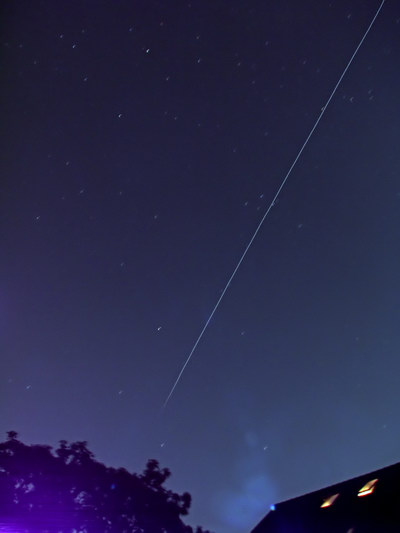
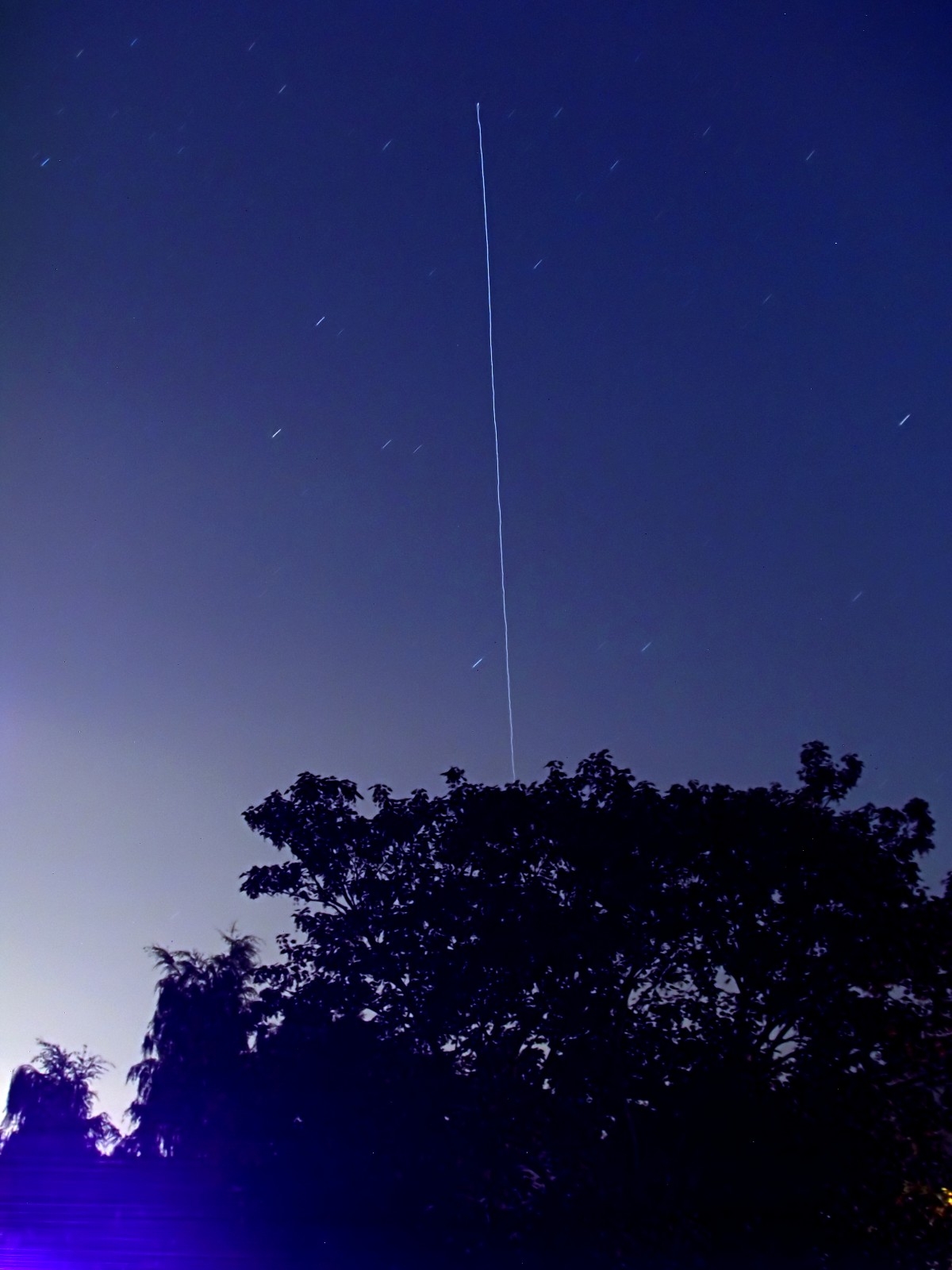
This is another ISS pass over Mülheim, from August 16th in a 128-second exposure. I’d like to wish Fraser Cain, the publisher of Universe Today, a happy birthday with this image! It’s a much better shot than my previous effort – only, for some reason, now the ISS trail is straight, but the star trails are a bit crooked. There’s also a bit of light pollution on the bottom from the balcony lamps and some sensor glow, but I like this better because the space station faded out before it went behind the maple tree.
18.8.2013 von Guido
· Category: Astronomy, ISS & Co
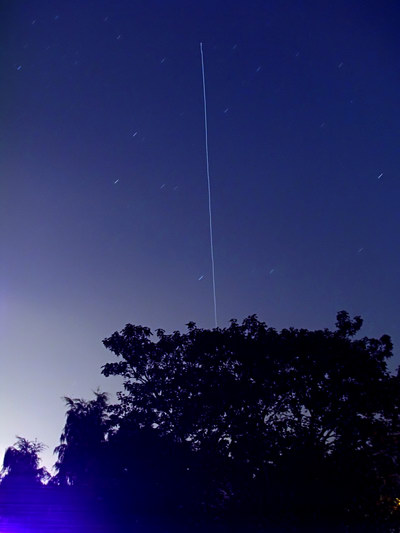
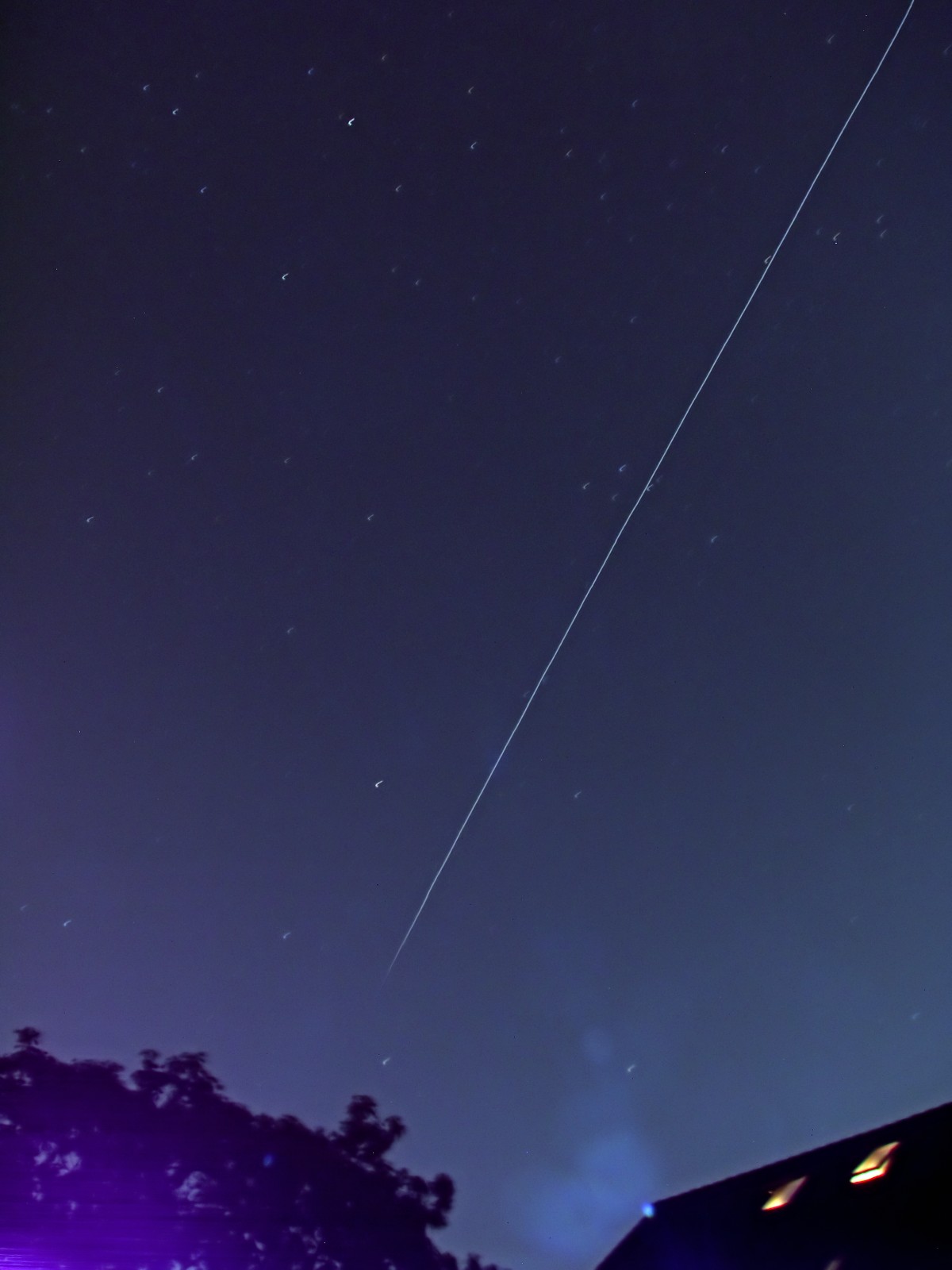
This is the ISS passing over Mülheim on August 14th and again I have to mention that the space station was not drunk, but my tripod still tends to wobble a little. The glow in the lower left corner is not light pollution, but comes from the sensor because the camera isn’t actually built to do a 128-second exposure.


 BLOG
BLOG
 GALLERY

 Search
 Links
Links FAQ
FAQ